For a Culture of Empathy and Dialogue in Nepal
Für Deutsch klicken Sie bitte hier.
The School of Nonviolence in Nepal is a movement founded on a simple yet powerful conviction: social change begins with the way we speak to one another. Since 2009, dedicated teachers, students and activists have been bringing the attitude and tools of Nonviolent Communication into schools, families and communities – fostering greater empathy, respect and emotional safety in everyday life.
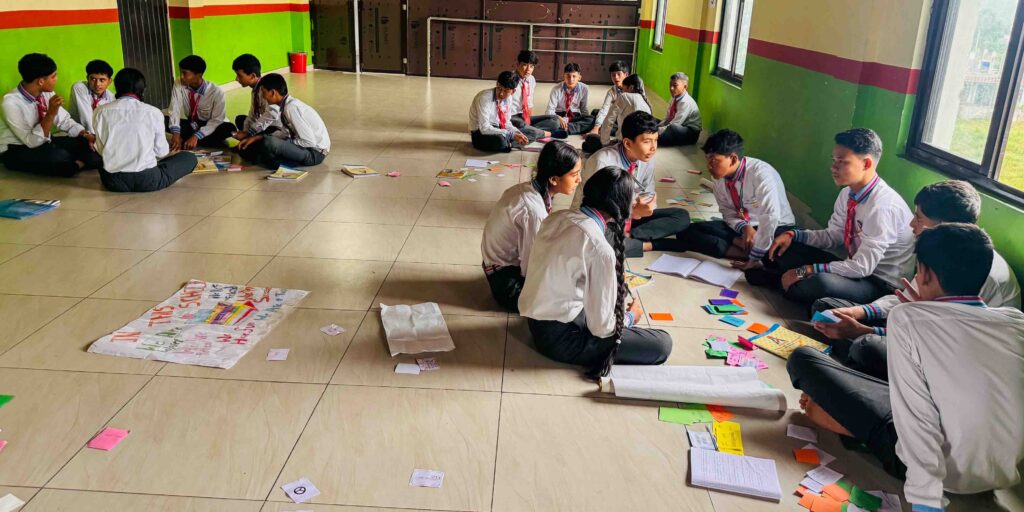
Nonviolent Communication – developed by Marshall B. Rosenberg – supports people in expressing feelings and needs clearly while listening to others with empathy. The aim is not to be “nice”, but to communicate honestly, clearly and in a connecting way, so that conflicts can be resolved without blame.
This is exactly where the School of Nonviolence comes in: it creates learning spaces in which people gain a deeper understanding of themselves and others. In schools, connection before correction replaces old patterns of punishment and authority. Children experience appreciation instead of fear. Teachers discover new ways of leadership. Parents learn how to shape relationships without threats or pressure.
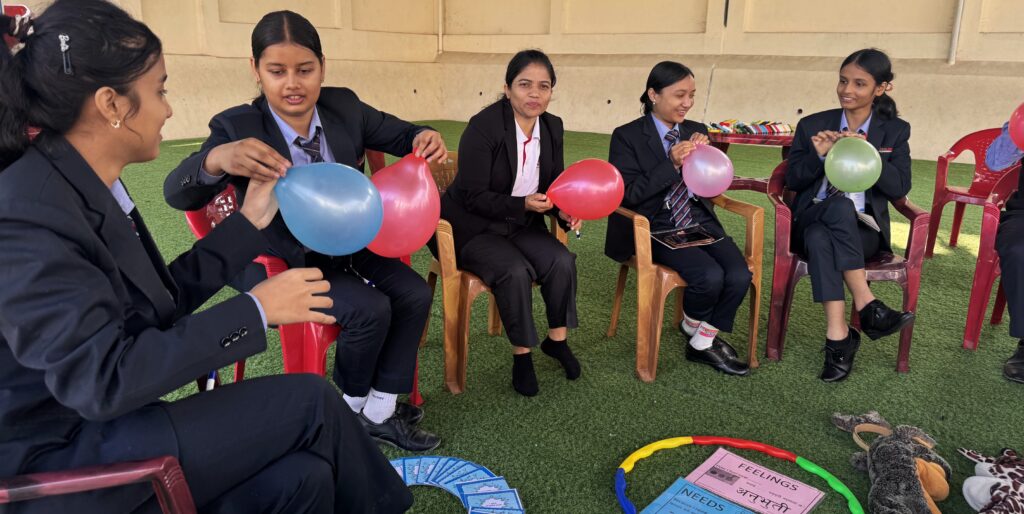
Whether in trainings on emotional intelligence, programmes for pupils, or the facilitation of women’s and youth groups – the core is always the same: peace is a skill that can be practised. Step by step. Conversation by conversation.
The movement in Nepal was initiated by teacher and trainer Sri Ram Timilsina, who took part in international trainings in Nonviolent Communication in Bali from 2017 to 2019. Today, the School of Nonviolence trains its own trainers. The programme begins with two three-day courses. Participants then put what they have learned into practice over a period of six months – as assistant trainers in schools or in their communities. After the final training, there is a celebration. And, as Sri Ram says: “Then the deepest form of learning begins – teaching.”
By now, the movement has reached more than 1,200 schools and groups in several regions of the country. It does not grow through large budgets, but through trust, voluntary commitment and the conviction that every encounter matters.
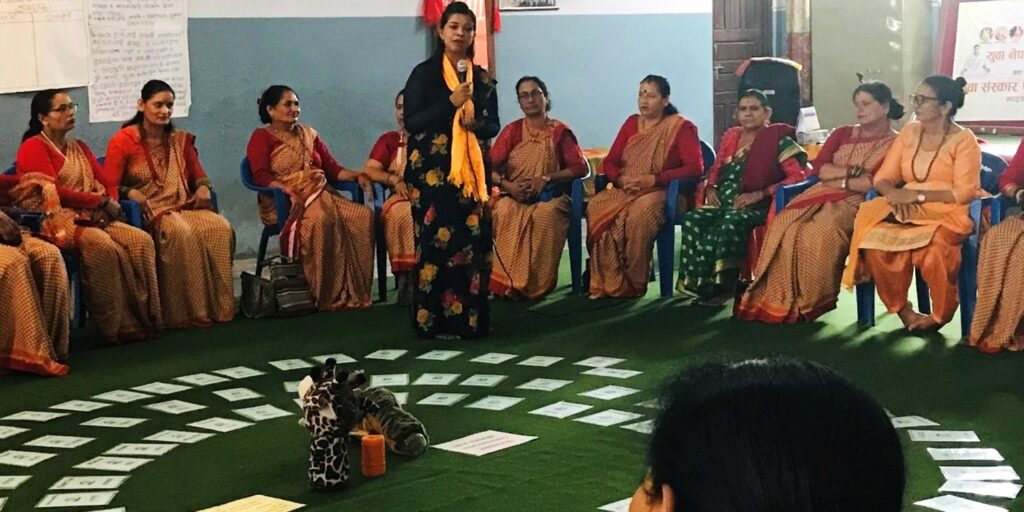
The work is financed primarily through local efforts in Nepal: trainers reinvest part of their fees into the programmes. Some private schools help cover the costs for neighbouring public schools. However, not all institutions can afford a full training programme. In particular, the training of new trainers is cost-intensive.
This is why your support is warmly welcomed. The School of Nonviolence uses external funding very consciously: it serves only to close gaps, not to create dependencies. The strength of the movement remains rooted in Nepal.
Please transfer your contribution to:
IBAN: DE81 6739 0000 0086 0243 06
BIC: GENODE61WTH
Account holder: EcoHimal e.V.
Reference: School of Nonviolence
Specifically: at 20 schools, monthly workshops on social learning and nonviolence take place. The annual cost per school is 610 euros.
The training of 20 trainers – including three workshops and practical phases – costs 1,400 euros and extends over one year.
All members of the EcoHimal association work on a voluntary basis. Every contribution flows one hundred per cent into the project.
Thank you very much for your cooperation!
EcoHimal
Society for Intercultural Cooperation e.V.
Dr. Hofmannstraße 25
97980 Bad Mergentheim, Germany
www.eco-himal.de
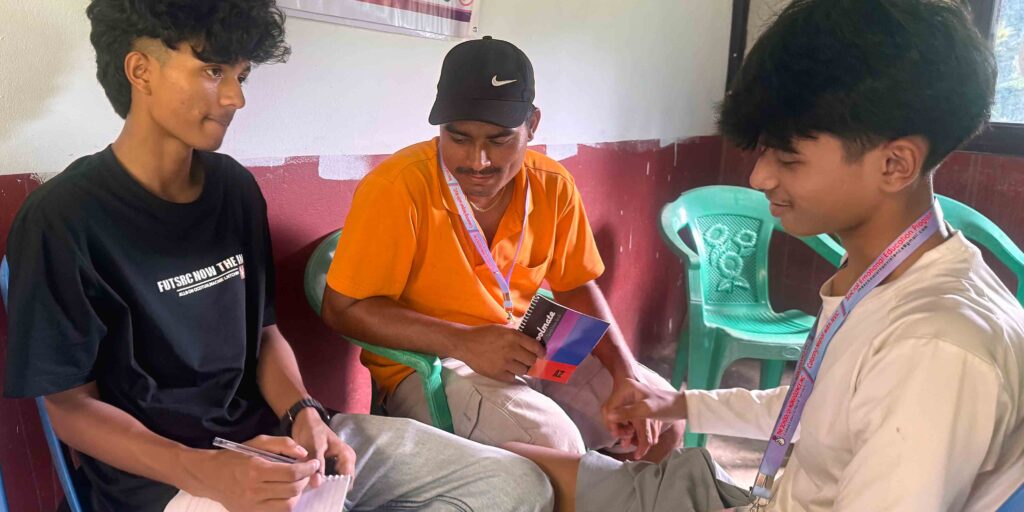
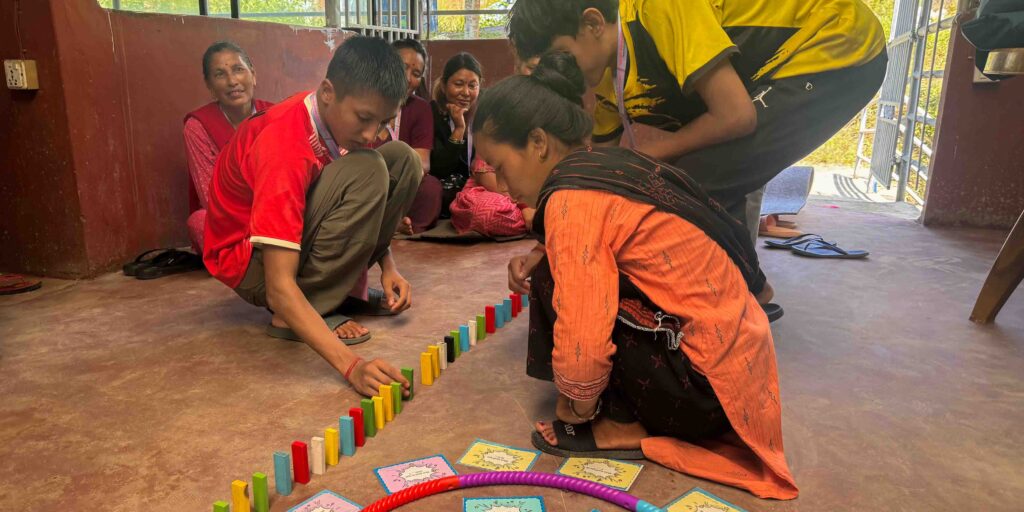
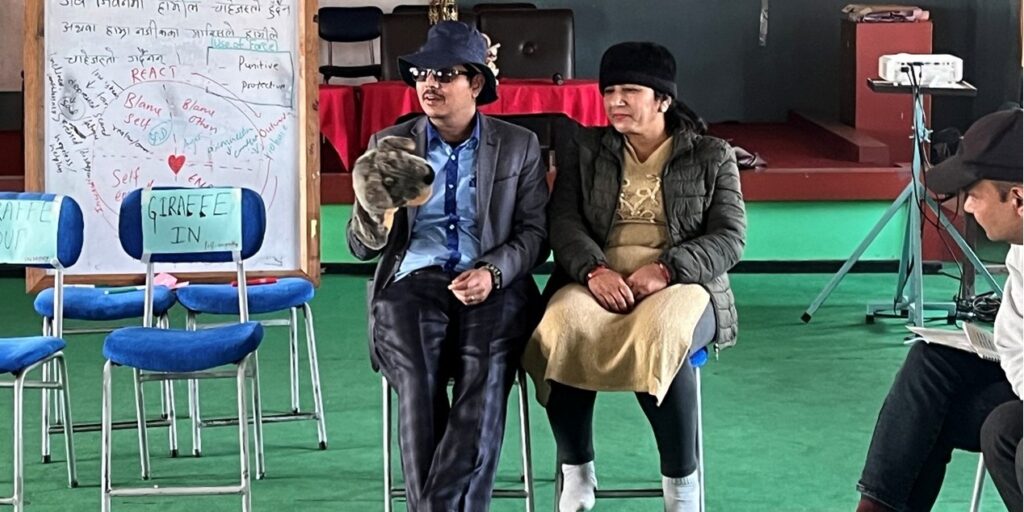
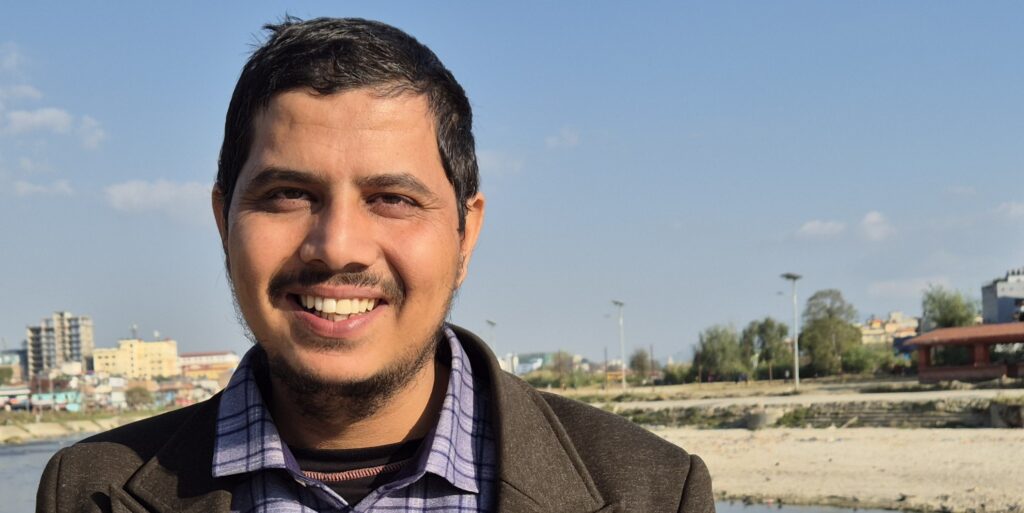
“The stories shared by survivors of the violence were raw and honest. Through Nonviolent Communication, we explored the needs beneath the pain they had not been able to express for years: the burdens during and after the period of violence, and the grief over their shattered hopes. Through connecting exercises, self-reflection and role play, clarity, possibilities, responsibility, hope and new determination emerged step by step. A remarkable shift became visible: from reaction to reflection, from blame to self-responsibility, from waiting for change to the decision to create it, from isolation to a sense of belonging. Participants gained an active hope – not the passive ‘someday’ hope. They developed powerful, realistic action plans: coming together as a community, speaking openly about needs, building emotional support, helping one another to acquire skills and livelihoods, addressing institutions, formulating clear requests as a team – and, where necessary, initiating nonviolent protest.”